While we usually don't reprint content, this list by David Leibovitz was just too brilliant not to share. The original article can be found on his intelligent, educational blog
here.
"In the reverse direction, outside of France you’ll often pay hefty prices on French-made items; certain goods one can buy in France quite cheaply. Of course, shipping, exchange rates, taxes, and other costs figure in to those prices when you see them in a store in New York City, but if you’re coming to France, here’s a few things you might want to check out. I didn’t include things like chocolates, macarons, or other obvious things simply because, well, they’re pretty obvious.
For bringing stuff back, although you can buy zip-top freezer bags in French supermarkets, the very heavy ones aren’t available, so you might want to bring a few from home for securing whatever you schlep. Bubble wrap and packing tape are not easily available, so you might want to pack a few sheets along and a small roll of tape if you plan on buying things in glass jars to carry home. I slip small jars into socks then put them into shoes in my suitcase, which cushions and protects breakables.
Wine and some cookware are cheaper in Paris, but they’re hard to carry, especially with luggage restrictions. Certain French companies manufacture their cookware in Asia so it’s not always a bargain to buy it France. (Plus you always pay a 19.6% tax on all purchases in France.) If you’re a wine or absinthe collector, perhaps it’s worth carrying bottles back; La Poste sells boxes specifically for shipping wine, with Styrofoam inserts for two bottles.
The rules are constantly changing about what you can and can’t bring back to your home country. So it’s always best to check the website of your government customs agency for the latest information. Few countries allow fresh fruits, vegetables, or meats to be brought in from other countries unless they’ve been heat-treated, which means sealed in a can. Jars are iffy and are sometimes confiscated.
At present, you can’t bring things like mustard or jam on the plane, and I’ve heard third-hand accounts of chocolates from La Maison du Chocolat and Ladurée macarons being taken away at security. The rumor is that they know what boxes to look for, take them away, and then eat them.
1. Mustard: I like Edmond Fallot mustard quite a bit (you can find it at swanky prices in gourmet stores like La Grand Épicerie, or at normal prices at G. Detou), although when I first moved to France, I had my groceries in a sack coming home from the supermarket, and I had a giant jar (think a quart) of Amora mustard in there, since it was so inexpensive. A woman sitting next to me, said, “Très bon…et très forte!” (“Very good…and very strong!”) If you don’t want to mess with jars, mustard is also sold in plastic squeeze bottles as well.
(And although I’ve never tried it, I know folks addicted to Savora, a spiced mustard-based spread from the same company. It fetches very high prices in the states, no doubt because folks are accro, or ‘hooked’. Which may be the reason I have yet to taste it.)
2. Salt: I’m a salt chauvinist and although it sounds elitist and annoying, I really do use exclusively French salt. And that’s not just because I live in France. I get salt whenever I travel. But no matter how many little bowls of white, gray, and whatever-colored crystals are lined up on my counter top, I always reach for the little bowl of French salt first.
The last few years, fleur de sel de Guérande has been in short supply because of untimely rains, when the salt was supposed to be harvested. But you can find it in certain shops and markets, as well as its cousins, fleur de sel de Noirmoutier, Île de Ré, and from the Camargue. Depending on where you shop, and the provenance, a 125g (4 ounce) container costs between €3-€5 in France. The price is about double elsewhere. Coarse gray salt is a bargain in France, too, and just about every supermarket sells it for roughly €1.25-€1.50 for a 500g (about a half pound) bag. I buy it and grind it myself in a blender or mortar and pestle, and use it for cooking and baking.
3. Biogaze: When I worked in the restaurant business in San Francisco, I worked with quite a few French people. And in the restaurant business, as you can imagine, there were quite a few burns. After one of my French co-workers took a trip back to France, he returned with several packs of Biogaze, saying it was great for treating superficial minor burns. And sure enough, these pre-moistened layers of gauze are great for kitchen brush-ups with heat. A pack of ten costs approximately €9 and you can ask for them at any pharmacy.
4. La Roche-Posay Sunscreen: For many years, the FDA would not allow these amazing sunscreens to be sold over-the-counter in the US. But I saw them on shelves on my last visit, selling for a whopping $29, plus tax. In France, my favorite sunscreen is the Anthelios XL (the ‘fluide’ one is for the face; the others are thicker lotions) and costs about €11. It’s extremely liquidy and feels like water going on, so there’s no gunky, creamy feeling meaning that you can wear it without feeling like you’ve got a layer of pastry cream on your face. Depending on the season, stores like Parashop, which are all over Paris, often discount it or put it en promotion.
(Note that a parapharmacie sells cosmetics but not remedies or pills or drugs. Regular pharmacies do fill prescriptions, as well as carry cosmetics. In France, over-the-counter drugs are, indeed, sold over the counter. So although you might not see them on the shelves, you can purchase some things, like Biogaze, without a prescription.)
5. Lentils from Puy: Until regular lentils, these compact, sharp-edged lentils are grown in volcanic soil and allowed to dry on the stalk. Their terroir gives them a minerally flavor. But what’s even nicer is that they don’t turn to mush when you cook them. About 25 minutes in boiling water with an onion half, a bay leave, some thyme, and maybe a few chunks of bacon. Drain, season, and serve. Or add tiny cubes of cooked carrots, celery, and fennel, let cool, and toss in some crumbled goat cheese and nuts—voilà, the perfect side dish or lunch in about half and hour. I always keep a bag on hand and they’re about one-quarter of the price in France than they are outside of France. Most well-stocked supermarkets sell green lentils and although you can find regular green lentils easily, if you see the lentilles de Puy, grab those.
6. Kitchen Gadgets: Although large cookware is unwieldy and not always a bargain in France, small gadgets and paring knives, especially those made in France, are. Outdoor markets always have stalls of people selling everything from Opinel knives to little tartlet molds. Yes, you can buy them at the specialty shops around Les Halles, but they’re not selling madeleine molds for €2 or wooden-handled Nogent paring knives for €5.
If you’re not able to hit the market, La Vaissellerie, which has shops all over Paris, also has quite a few kitchen gadgets available inexpensively.
(Tip: The cutlery with the bee or fly on the handle may be labeled Laguiole, but is not the authentic, high-quality cutlery from that region. The name was never trademarked and a real Laguiole knife will not cost less than €50. Two reputable makers of Laguiole cutlery are Forge de Laguiole and Laguiole en Aubrac, among others.)
7. Christine Ferber Jam: Every American I know goes nuts over these jams and jellies from the famed Alsatian jam-maker Christine Ferber. I make my own, and as much as people want to quiz me about which one to buy, I’ve only tried one or two…but her flavors sure look tempting. And I know many a folk who’ve returned home from their trip with a lone jar, who write frantically wondering where they can get more in America. (You can’t.) The best selection is at La Grand Épicerie, however Da Rosa sells them as well, although they’re a few more euros per jar.
8. Salted Butter: Really great salted butter is available in every French supermarket (Tip: Look for one with a blue and white label and aux cristaux de sel de mer, or ‘with sea salt crystals’) and if your home country allows it, you can bring back blocks of this butter and store it in your home freezer for months. If traveling during non-summer months, I put blocks in zip-top bags and bring them to friends, too. Most butter will survive a several hour trip just fine, but if you bring an insulated freezer bag and ‘ice bricks’ (ask a friend or your hotel to chill it overnight) over with you, you can make good use of them on the return trip.
If you want to bring back top-quality French butter, you can buy Bordier butter at La Grand Épicerie, Da Rosa and Breizh Café or Pascal Bellevaire butter, which is pretty great too, at any of their fromageries or La Grand Épicerie.
9. Speculoos Cream: I lugged a few jars of this spread back to the states to friends, and I got notes in my Inbox with expletives from them a few days later, saying I’ve ruined them for life. This gingersnap-like Speculoos cream is a bit of sweet-spicy heaven in a jar. It’s just a few euros in most supermarkets and can be found in the same aisle with the jams and chocolate-hazelnut spreads.
10. Valrhona Cocoa Powder: I hesitate to call for specific brands in recipes when I’m writing them up because 1) it’s frustrating when you want to make a cake and you need to mail-order for something, and 2), Not everyone can afford the same swanky products. However I do find that this French-made cocoa powder is much darker and more flavorful than any other and because it makes such a difference, I’ve found that the results are dramatically different (ie: less intense) if made without it. If you’re a dedicated home baker, you can buy a 3 kilo (6 1/2 pounds) of this cocoa powder at G. Detou for around €35. It’ll keep for a few years in your pantry because it’s packed in air- and light-tight bags. If you’re not a dedicated baker, you’ll be happy to know that it comes packed in three individual bags, so you can split the booty with friends.
Bonus #11: Hazelnut Praline Paste—I had to add this one at the last minute because I brought some American friends into the shop of John-Charles Rochoux last week and after they were done swooning over the tiny spoonful offered, they picked up four jars of this spread made of darkly caramelized hazelnuts, using fresh nuts of the highest quality, then ground to a smooth paste. Words can’t describe how good this tastes—just make sure not to put the it in your carry-on: it’d be a shame if the customs officers got to enjoy it, instead of you."
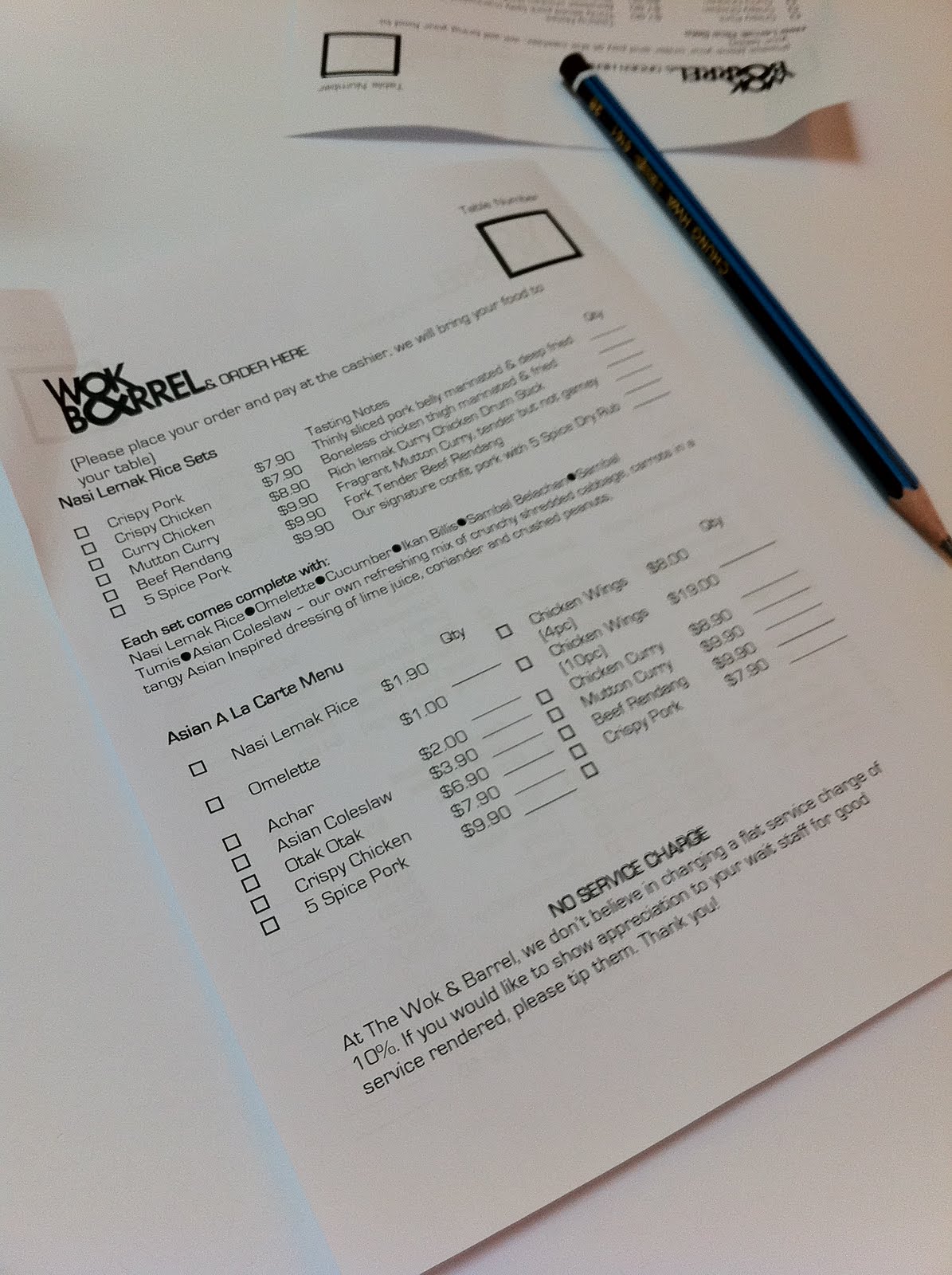
 It seems like new places to eat are springing up (and perhaps also shutting down) in Singapore faster than overnight toadstools. One specific kind of "new place" is a remake of old favourites from hawker centers and the one that I visited last week was particularly delicious, as you can see from their profile pictures.




 Posts
Posts

